Film
Skool

Noah's Arc: The Movie: coming June 2025!

 |
| WORDS BY ZEON KANE |
 It's the second episode of the second season of Looking, and after last week's
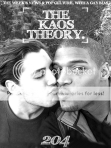
  Patrick (Jonathan Groff) and Kevin's affair continues, moving from the office floor and the woods to its most appropriate venue, a sleazy motel. It's hard not to rail against them: Patrick is a privileged WASP, and Kevin (Russell Tovey) is English. They're like hot young versions of Bush and Blair. (Now there's a stomach-churning image.) But seriously, I can't help thinking about Patrick's hard done by ex Richie (Raul Castillo), the blue collar Latino and the only character who acquitted himself with some dignity in season one. But regardless of the rights and wrongs of their relationship, Patrick and Kevin are very sexy together. What's hotter is knowing that the actors are out gay men. I remarked to my boyfriend as we watched, "Do you think they're at it off-screen too?" That's the added frisson Looking gifts us.
 Dom (Murray Bartlett) takes a back seat in this episode, although there's some awkwardness with his daddy Lynn (Scott Bakula) over their open relationship. That's not going to end well, is it?
 I was once told by a prominent gay playwright and activist not to talk about well-off, entitled gays, because that's how we're perceived by the wider world. But it's because well-off, entitled gays - like so many spoilt children in their exclusive city playgrounds - are most often seen and heard that we must stand up and say, "I'm not Augustin. I'm not Stephen Fry. I'm not the ghastly Ivan Massow." It's when we're silent that we end up locked out, and end up with movies full of college-educated trustafarians like the pretty people in Patrik Ian-Polk's The Skinny. Those characters might be black and Latino, but they're not an honest reflection of the lives of many black and Latino Americans, any more than those of their white counterparts in the likes of Queer As Folk are of white Americans.


 LONGTIME READERS of kaos will know that over the years, I've expressed my disappointment at the racial segregation in gay TV series, from Queer As Folk to Noah's Arc. Only Rikki Beadle-Blair's cult drama Metrosexuality was brave enough to depict a world where people don't just mix with "their own kind".


 .
. all about then? gets pretty steamy. Were you ever worried readers wouldn't be able to read it on, say, the Tube?was adapted for the stage, wasn't it? I caught the performance - (black gay singer) David McAlmont was in the audience! Tell us about that.
 , but I was representing things that were – and are, for all the signs are encouraging for the future - really happening there today; and of course the emergence of a strong liberal voice doesn’t alter the broad way gay and lesbian people are perceived. As someone astutely said, victory would be a hate crimes bill that included LGBTIQ people. As far as my book goes, I’m writing as best I can towards a black audience, so there’s no intention to, as it were, offer up Caribbean dirty laundry to a bien-pensant white middle-class audience for them to scold Jamaicans over. In any case, my intention is to have readers relate to people – a refugee; a petty criminal – they might normally not think about, or not think of as having complex inner lives. Or, if they are those people, to see their lives for once placed centre-stage in a tale, and taken seriously. is your first novel since 1998's Warriors & Outlaws - where have you been?
 , which we decided to bring out first as it’s timely and provocative and should help the imprint make an impact.
 – though in Faggamuffin I also needed a Baldwinian uplift and affirmation of humanity. Himes’ later Harlem thrillers are brilliant too.
 ? is available now, from Amazon and all good book stores.


 |
| Queer As Folk: All white in the hood! |
 |
| Bad white men attack! |


 John R. Gordon writes exclusively for
 , as well as episodes of the TV series, the short film Souljah, and for the stage, Faggamuffin. His novels iclude the award-winning Skin Deep
 , Warriors and Outlaws
 , and Black Butterflies.
 So it’s 3 p.m. Sunday. I’m dodging downpours cycling up through the West End to Farringdon and the Free Word Centre which I’ve never been to before (except I was there accidentally a week ago because a friend texted me on that Friday and asked Was I going to the Gay Africa thing and that made me think it was that Sunday, and I cycled all the way across town and found chains round the door-handles). But here I am back again in the empty business district running up the hill to something more residential, and the Free Word Centre is modish glass and wood boxiness next to Victorian brick terracing and on a corner lateral to an old-fashioned pub – lobby, large atrium a glass wall beyond it with books in display cases and in the window posters for Gay Africa hosted by the Red Room and English PEN, the image a map of Africa all pink and the quote The darkest thing about Africa has always been our ignorance of it (George Kimble geographer, 1912, not that anyone remembers that and nor did I). To the right a room where home-made snacks are on offer with traditional African hospitality and generosity and it’s a free event run by volunteers.
 runs The Red Room and it’s like the opening credits of a Hollywood movie, Topher C presents in a Red Room event co-sponsored by PEN starring at the long table – well, that comes later. I say hi to Ajamu, friendly and unpretentious as always in a Belasco tee-shirt featuring a brotha with a paddle, hazing and leather – Ajamu the stills photographer for the event for the Rukus archive he and Topher are ongoingly creating recording black British gay & lesbian life – and later, and unconnectedly a good-looking black youth in a large hat with ear-flaps and a wide mobile mouth speaks confidently of the importance of art, of writing, rightly in this place the function of which is to assert the value of the written word, its importance in commemorating black gay lives in a hostile world, youth putting itself forward as is right and proper, almost the perfect ending to the event. (Though he talks too of self-hatred and how his afrocentric upbringing with its flip-side conservatism did not help him as a gay youth and how his Christian Jamaican mother accepted him in a way his atheist Zimbabwean father did not).
 And Ajamu introduces me to Bisi (Alimi), a slender, fey Nigerian guy in a turquoise dashiki with silver trim and one of the event’s keynote speakers, who came out on Nigerian TV and now is living here, a refugee though whether from that craziness or other reasons he didn’t say, though he did say, Let’s not carry on in this belief that everyone in Africa is crazy and if you go there you’ll be hacked to pieces the moment you step off the plane. And I say hi
  to Topher, who is friendly and tall and handsome as always in a figure-hugging red jumper and nervy and preoccupied too with the event being a success (and as the event begins there are about 25 of us in the audience and 12 round the table invited speakers, the turnout he dreaded, but people come more and more till there are 200 at least, with latecomers standing round the walls and kneeling on the floor not Soon Come because as many of them are white as black pretty much – maybe the crowd overall is 65-70% black and so it’s a huge success and Topher is rightly proud and it’s a relief to have it proved that so many people will engage, that so many give a fuck and on a downpouring Sunday afternoon, and not all middle-aged – also a relief because the torch must be passed on even if not soon - because there are a lot of young folks there too, the camera filming the event in the wrong place though, with every late-comer, every fag- and toilet-breaker passing in front of it, some making a bob of obeisance but still in the main failing to actually get themselves off-camera).
 I don’t know many people there and the friend who texted me the wrong week never showed up but I see Robert Taylor the photographer looking good in tartan trousers and a black fedora with a scarlet lining and dark-skinned immortality and his as-always shaved head, and his partner, and Dennis Carney and how many years has it been, one-time lover of Essex Hemphill as photographed by Rotimi, upright and big-eyed, grey in his Mohican now, in Batman villain purple and green (and later he gets church and is calling
  out agreements in response to remarks at the discussion table, and later disagreeing too with a call to play down the sexualisation of the presentation of gay culture made by Bisi or perhaps another African speaker, Godwin, so what is fought for is not a simple thing, nor all agreed upon). A shaven headed pretty Zimbabwean activist called Skye Chirape in a cute military hat and punk army coat with Gay Africa painted roughly on the back in white house-paint and a flaring multi-coloured hand-done skirt from Portobello Market tells me and Robert how her video-blog has led to her homophobic preacher mother being asked to step down from leading her church because she Cannot even control her own daughter. She is petite, delicate almost, and determined, and she is one of the invited speakers, and she neither gloats nor seems guilty. And Robert was in Zimbabwe with a white friend at one point on a farm repossessed by ‘war veterans’ and the white friend was asking what the farm’s new black owner thought about that and Robert wanted to shut him up and get to the airport.
 I make the mistake of choosing a hard chair, seduced by the curve of the back, but four hours of anything needs some padding for the backside and I’m soon squirming like a kid. A crazy-seeming white guy with grey hair and white-stubbled beard a few seats up from me writes cryptically in red on a copy of Time Out. A cute, hard-faced black youth in close-fitting trousers, dashiki and winkle-pickers and holding two mobile phones and a camera changes seats constantly in front of me, filming moments on his
  camera from a dozen different angles, his Cuban heels clicking on the floor as he moves round the discussion table. Topher introduces [the host, who] introduces the white gay guy from PEN who gets a laugh by doing almost nothing more than pointing out the toilets and the fire exit and lets them get on with it then the two moderators are introduced, a (self-described) straight black woman at one end of the table and a gay African-American man at the other, whose main role is to call what he calls a Gay Time Out to break debate to listen to poems or songs or show in an alcove round the corner, short films, and the host's, which turns out to be a short personal piece about being homophobically
  attacked on the South Bank for holding hands, sad and a corrective to the debate we’re having about being gay in Africa which as several people point out half-assumes everything’s alright here (and later a flamboyant youth speaks angrily of being refused entry to a club by a Polish bouncer who claims because he’s black he can’t be gay and Dennis seconds this; and another talks of asking for a drink as white as my boyfriend – my boyfriend’s white – and being given Vodka with blackcurrant well blackcurrant isn’t white is it – so we need to address racism here as well as worrying what’s happening in Africa, he snaps, and no-one denies it. Still, it’s a cry from facing the death penalty).
 They tell us the idea of the table is once the debate’s got going anyone can come up tap someone who’s spoken on the back and they’ll leave the table and the new person can sit down to make their point but of course everyone’s too shy at first, and it takes some urging to make that happen and it’s apparently a classic format but I wonder as I didn’t speak but might have liked to ask questions of those who know more but there’s no space for that. What’s good good good though is we hear a lot of Africans speaking, activists, refugees, Jide the preacher who I met
  once before, Zimbabweans, Ugandans, Nigerians as well as black British and Caribbeans – these last two in particular talking of identity connectedness responsibility and the power of holding a UK passport and how that power gives a duty to speak out. And talking of listening to what gay Africans need and not imposing agendas and what that means (to be gay to be
  African/Nigerian/Yoruba and so on) and what is needed and what those agendas are, Bisi and other activists alluding to being co-opted and dropped by western gay rights groups and yet John Bosco, a Ugandan refugee, talking of being at a protest where all those protesting bar two were white gay campaigners and so those who opposed them said Why are you doing this There are no Africans here, and he spoke of the need for those gay Africans who get here to make themselves part of the struggle and not just exhaustedly leave it to others. (And later a white queen with a shaved head, I look like I should be in the Coleherne he said talked of being the only person trying to hand out flags in Brixton for J-Flag and he was a Buddhist and said the straight black Buddhists he knew were not homophobic and stood up for gay rights and he had a Scottish accent but later a friend said that off-stage he didn’t, and it was a sidebar to talk about religion and there are 20,000 Buddhists in Nigeria, he said).
 And Lee Jasper was there as a straight man championing (black) gay rights and I thought of the awful emails he sent that girl and how he wants to rule the black turf like an old-school machinery politician but he was there and you’ve got to respect that, for four hours on a rainy Sunday with the gay folks where he spoke for only three minutes, so there was something genuine there. And Bisi said of his mother You stick with your Christianity and live your life and I’ll stick with my atheism and live mine, and I was relieved that several of the African activists announced their non-belief and religion was not given an easy time in the room as it was clearly in the case of Christianity an American imperialist religious-right-backed fuck-over intervention in countries already in difficulties just so far as basic functioning to scapegoat,
  abuse, jail and murder gay people, or (take a deep breath) LGBT and now I people (a friend asked: Intersex, I guessed, and it turned out rightly), and it was mentioned that women’s rights are foundational to gay rights. Jide in South African flag lapels and clerical collar spoke up for an inclusive Christianity to what seemed to me only polite response when I was expecting more We’re gay and Christian and that’s okay, and Islam was little spoken of in the Christian contexts of Nigeria, Uganda and Malawi, where mad campaigns are being waged – but Jide won respect for taking part in debates about sexuality in Africa after an African Sexuality conference in Lagos where the only speakers on gay issues – raised at only 2 of 22 meetings – were white Americans and Canadians – and Jide determined to get Africans in particular gay Africans speaking on these issues. But it was very different from an African-American gay meeting where Christian belief would have most likely been the order of the day, and a relief to atheist me, who sees these religions as the problem, Christianity and Islam both religions of empires imposed on traditional beliefs though there was no excess of sentimentality about those beyond the truth that the church and the mosque construct a particular and virulent homophobia.
 Allies were spoken of, and supporters, and those who would listen and not impose were welcomed regardless of race or nationality or sexuality, and how Africa was many different countries and each country was very different, and within each country were many different languages and how would you approach this man in this village in this language, no big broad-brush agenda could simply succeed. A Father Christmassy bearded white man spoke of poverty as the big problem and cited its intersection with multiple abuses of bad governance, and John the Ugandan refugee later pointed out that because of its Workers’ Party roots the abusive and violent government of his country had been nodded at by
  Blair and Brown’s government here and asked how far it was possible to differentiate the violence against and abuse of LGBTI Africans from other abused and violated Africans, and what that really meant in terms of priorities and things to be done – and I felt the paradox of it because if LGBTI rights have to take a back-seat to sorting out the poverty of the entire world then we can give up right now because that day will never come and we will be in second-class perpetuity. And that paradox – the paradox of a single-issue focus in a world full of problems (and yet you have to look at things one at a time and you have to respond to what moves you most viscerally and emotionally or you just look away and do nothing) led to a tensity in the debate that was perhaps profoundly irresolveable though not preventing of action. And homosexuality as an identity as a Western cultural construct and gay rights as a recent Western idea, were raised but did not dominant an arena where activists outnumbered academics, and their activism predicated on being gay or being lesbian as the source of their oppression their exclusion their exile.
 And I’ve mostly spoken about the men (and even the title of the event Gay Africa subsumes women’s experience within men’s) but the women (making up near half the panel and audience) spoke incisively and wisely and a woman who’d toured the first-ever play with a lesbian storyline around Cameroon said she was surprised how easily people had accepted it and been interested in it and that there were debates they wanted to have and not all Africans were against gay people despite the crazy preachers and Jide praised Desmond Tutu as did Lee Jasper for always speaking out for gay rights on the continent when he could so easily have stayed quiet and I said amen to that. And the poets read inbetween all this, rousing politically engaged verse from the Rhymes Won’t Wait Collective, four feisty sistas, two I think white, two black, and the two black women curvy and dark with flame-red braids, and one read a piece about her Nigerian father and how he thought Elton John and David Furnish should have adopted a girl and she was surprised by his engagement with the issue until the punchline, A boy they will be bound to molest. And Keith Jarrett (his one-man show is on at the National) reads more personal poems that touched and engaged us, uneasy though the change of gears between debate and performance often felt, as it did with the films, Souljah so overtly coarse and violent, though the audience did engage not knowing how long it would be or with any preamble and cheers broke out when Stanlake kicks Cuts in the face and takes his knife.
 And Peter Tatchell came up to the table and spoke, powerfully and harshly and his voice lacks a certain warmth but he is a powerful speaker, and he remembered African freedom fighters and how they had not excluded what we now call LGBTI Africans from the struggle and reminded us that when Huey P Newton spoke of gay rights to a Pan-African audience of revolutionaries they applauded and didn’t boo or reject him, and challenged an arm of the debate about African solutions for Africans that had in truth not been raised at this event, or not at all in the terms of rejection he was considering, but talked nonetheless rightly of the African Bill of Human Rights that was indeed devised by Africans for Africans, yet made a late-comer’s slip: We cannot understand the awfulness of what people have been through in these countries, he said to us all when we who had been there for the whole event had been listening to those who understood precisely because they experienced it in their own lives speaking out, and Peter was used to talking to an all-white room, I guess, and while I salute his courage and relentlessness and admire his determination to speak out and act on gay rights on a world-wide basis there’s a lack of engagement there somewhere, and a friend of mine spoke of stations of the cross.





































































































.jpg)
.jpg)
.jpg)


.jpg)


.jpg)
.jpg)


