Showing posts with label John R. Gordon. Show all posts

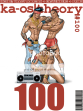
Yemi & Femi in Masc 4 Masc

A r t
S k o o l
A r t  i s  n o t  a  t h i n g ,  i t  i s  a  w a y .

Strip superstars Yemi & Femi are them ones you cuss to your friends, then stalk on Instagram. They're too nice, too peng, too hench, and too much. And their grills, though...

Their graphic novel debut soon come, and you can always catch them on John's official siteCopies of Yemi & Femi's debut - Yemi & Femi's Fun Night Out - are available for free (UK only). Contact John at john@teamangelica.com. For orders outside of the UK, please enquire.

Yemi & Femi in Masc 4 Masc

A r t
S k o o l
A r t  i s  n o t  a  t h i n g ,  i t  i s  a  w a y .

Strip superstars Yemi & Femi are them ones you cuss to your friends, then stalk on Instagram. They're too nice, too peng, too hench, and too much. And their grills, though...

Their graphic novel debut soon come, and you can always catch them on John's official siteCopies of Yemi & Femi's debut - Yemi & Femi's Fun Night Out - are available for free (UK only). Contact John at john@teamangelica.com. For orders outside of the UK, please enquire.

Yemi & Femi in Post-Orlando

A r t
S k o o l
A r t  i s  n o t  a  t h i n g ,  i t  i s  a  w a y .

Strip superstars Yemi & Femi are them ones you cuss to your friends, then stalk on Instagram. They're too nice, too peng, too hench, and too much. And their grills, though...

Their graphic novel debut soon come, and you can always catch them on John's official siteCopies of Yemi & Femi's debut - Yemi & Femi's Fun Night Out - are available for free (UK only). Contact John at john@teamangelica.com. For orders outside of the UK, please enquire.

Yemi & Femi in Post-Orlando

A r t
S k o o l
A r t  i s  n o t  a  t h i n g ,  i t  i s  a  w a y .

Strip superstars Yemi & Femi are them ones you cuss to your friends, then stalk on Instagram. They're too nice, too peng, too hench, and too much. And their grills, though...

Their graphic novel debut soon come, and you can always catch them on John's official siteCopies of Yemi & Femi's debut - Yemi & Femi's Fun Night Out - are available for free (UK only). Contact John at john@teamangelica.com. For orders outside of the UK, please enquire.

Yemi & Femi

A r t
S k o o l
A r t  i s  n o t  a  t h i n g ,  i t  i s  a  w a y .

Strip superstars Yemi & Femi are them ones you cuss to your friends, then stalk on Instagram. They're too nice, too peng, too hench, and too much. And their grills, though...

Their graphic novel debut soon come, and you can always catch them on John's official siteCopies of Yemi & Femi's debut - Yemi & Femi's Fun Night Out - are available for free (UK only). Contact John at john@teamangelica.com. For orders outside of the UK, please enquire.

Yemi & Femi and the Day Eazy-E Died

A r t
S k o o l
A r t  i s  n o t  a  t h i n g ,  i t  i s  a  w a y .


Up and coming strip superstars Yemi & Femi's last adventure - Bear Talk - was a roaring success last week. Here's their latest, proving the guys aren't all fur coat and no knickers.

Their very own book will be available soon, but in the meantime, enjoy this taste of their shenanigans. And you can always catch them on John's official site.

Copies of Yemi & Femi's debut - Yemi & Femi's Fun Night Out - are available for free (UK only). Contact John at john@teamangelica.com. For orders outside of the UK, please enquire.

Yemi & Femi

A r t
S k o o l
A r t  i s  n o t  a  t h i n g ,  i t  i s  a  w a y .

A big thank you to writer and artist John R. Gordon for sharing Yemi & Femi's latest adventure - Bear Talk - exclusively with KAOS. Their very own book will be available soon, but in the meantime, enjoy this taste of their shenanigans. And you can always catch them on John's official site.

Copies of Yemi & Femi's debut - Yemi & Femi's Fun Night Out - are available for free (UK only). Contact John at john@teamangelica.com. For orders outside of the UK, please enquire.

Souljah

 review 
 Souljah 

JOHN R. GORDON'S NEW NOVEL, Souljah, comes with an unusual gimmick: A movie trailer. That's because a blistering short film  of the same name (starring Ludvig Bonin and Nathan Clough) has recreated a key sequence from early in the novel. You can head over to YouTube and watch it right now. I'll be waiting here until you get back.

Done? Did you enjoy that? Did it make you want to find out what happens next?

This wonderful little short is just a hint of the rollercoaster ride Gordon takes us on with Souljah, which oscillates between horror, comedy (one of the most grimly funny sex scenes you'll ever read), tragedy, and in the nail biting climax - which takes us on a heart-stopping night chase through London's streets - thriller.

"When violent thug Evill and his drug-dealing South London crew menace Stanlake, a young African refugee, and his mother Poppy, little do they realize that this effeminate youth is a former child soldier, capable of the most extreme responses. Forced to meet violence with violence, Stanlake stands up to his tormentors, only to find himself drawn into a darkly erotic and passionate relationship with the damaged, closetted Evill. As love begins to bloom between the two deeply-scarred young men old evil erupts, threatening to consume them both and compelling Stanlake to face – and move beyond – his past."

Souljah takes us back to when Stanlake was growing up, before, and most gruelling of all, during his time as a child soldier. Anyone who's seen Johnny Mad Dog will know what to expect: a catalogue of dehumanising horrors, that play out in a hyperreal, dreamlike fashion. It's Lord of the Flies, boys doing things they really shouldn't. Author Gordon doesn't allow us to look away from the spectacle, except to juxtapose 21st century London. And it turns out it's no less brutal than the war zone Stanlake is fleeing from.

In a way, Souljah echoes Gordon's brilliant 2012 novel Faggamuffin, which saw a gay Jamaican fleeing "the most homophobic country in the world" (a title now hotly contested by a number of African countries). In that novel, we saw London through a Yardie's eyes. With Souljah, Gordon goes even deeper; Stanlake must find his place in a world that is completely alien to him, and endure the dehumanising process of seeking asylum. It's a privilege for us, the readers, to witness. Painful, but a privilege, nonetheless.

But it's not all doom and gloom. Stanlake's - and his mother Poppy's - observations about modern Britain are often amusing and on the nail, and his slowly blossoming relationship with Evill a joy - albeit one that constantly feels like it might be crushed by the ugliness around it. But Gordon doesn't go in for cheap tragedy, a trope beloved by so many gay writers and filmmakers. Souljah brims with optimism and hope, despite the horrors adeptly recounted within its pages.

So it's a shame that, despite its depth and power, you probably won't hear about Souljah in the gay press. This month's Attitude has previews of books about Oscar Wilde, and the latest from the lady who wrote Tipping The Velvet; The Advocate is similarly backward looking and whitewashed. The stories of black gay men don't seem to be of interest to the gay powerbrokers.

That's a real injustice, because this is a story that deserves everyone's attention. Souljah is truly breathtaking, in scale, and in ambition. At times, the book had me crying like a baby. The book's final act escalated so rapidly I just couldn't put it down. I had to know how Stanlake and Evill's story ended. You will too. Be a soldier for the good guys: go out and buy Souljah. You won't be disappointed.

Souljah is out on Monday 22nd September 2014.

Read our exclusive interview with author John R. Gordon.

Black and gay in the UK

TEAM ANGELICA PUBLISHING is looking for exciting new voices for its ground-breaking forthcoming anthology, provisionally-titled Black and Gay in the UK and scheduled for release in Autumn 2014.

Award-winning novelist and screenwriter John R Gordon is putting together an anthology for the Team Angelic imprint, provisionally entitled Black and Gay in the UK.

“The aim is to create a volume that captures something of the rich variety of black gay men’s experiences in the UK, primarily as seen by black gay men themselves, but also including narratives, reflections and perceptions of non-gay family members and friends and non-black partners and friends.

We want to put together something that is in part in dialogue with those ground-breaking 80s African-American gay anthologies, Brother to Brother and In The Life, but that disrupts monolithic assumptions and speaks determinedly to a British and contemporary setting.

Is a volume celebrating in print the challenges and triumphs of black gay men in the UK needed in 2013? We think so. Whatever social progress there has been, black gay men still rarely see work of any sort that puts their lives and experiences centre-stage, and we hope this will be a chance to do so, and that this book will become some sort of resource, and at the least will capture an exciting moment in history.

We’re actively looking for stories, poems, (auto)biographical writings and think-pieces both serious and light-hearted about black gay experience in the UK. We hope to include the words of the young and less formally-expressed alongside those of the elders, whose insights into how perceptions around race and sexuality have changed over time are of particular interest; the insights of those more recently-arrived alongside those born and raised here; and the wisdom of those who are already known alongside that of the Future Legends.

Do check out our website, Team Angelica, for details and to see what we do.

Love,

John

The business end:

Work should be previously unpublished and not more than 5000 words in length. Excerpts from longer works are acceptable so long as they stand up in themselves.

If you’d like to send us something, please save it as a doc or docx or rtf file and email it to john@teamangelica.com. Please name your file as ‘[storytitle] by [author]’. In the subject-line on the email please say ‘submission for anthology, [title] by [author’s name]’. Within the document please number pages, and in the header say ‘[title] by [author]’.

A nominal payment will be offered for work accepted, along with a non-exclusive contract with Team Angelica Publishing and author copies of the anthology.

"Battyman in di studio!"

 review 
 Faggamuffin 

I
T'S BEEN A long time since John R. Gordon's last novel, Warriors & Outlaws, but in the meantime, we've had episodes of Noah's Arc (as well as the screenplay for the film, Jumping The Broom), and the brilliant short film Souljah. But since Gordon's publisher - the iconic Gay Men's Press - folded, no new books.

So, has fourth novel Faggamuffin been worth the wait?

Here's a clue: it was on the stage in London, long before the novel was even published. Iconic, black gay singer McAlmont was in the audience (I know - I held the door for him as he exited the theatre).

Faggamuffin joins John R. Gordon's previous works - Black Butterflies, Skin Deep, and Warriors & Outlaws - a definitive gay, Afrocentric oeuvre, with a very London bias. But here's the really important thing about Faggamuffin: it's a gripping page-turner. Set aside its impressive literary credentials - the searing, undeniable truth-telling - and you've got an electrifying plot in which our protaganist, Cutty, flees homophobic violence (and the murder of his lover, Sonny) in Jamaica, pitching up in London at the flat of acquaintance (and mini drug baron) Buju. And one tiny spark becomes a night of blazing suspense: Cutty and Buju's lust - and love - becomes an all consuming fire, and the novel deals with the fall-out from that, with Cynthia, Buju's girlfriend, standing by with a fire extinguisher.

(Spoiler: the moment Cutty and Buju finally come together should go down in history as one of the most exciting, sexiest, moments in literary fiction. Trust me: you'll shout, "WTF?")

This is a sexy, deeply moving novel, an unlikely love story forged out of the hell this world has created for some of us. Ever wondered what it's really like to be a gay Jamaican (chances are, you're probably not one)? Hearing, secondhand, about the horrors endured by our brothers in that part of the world is one thing, but actually living them through Cutty is another. The novel subtley reminds us that, but for the grace of God (as it were), you or I could be Cutty, and asks us to consider how we might deal with the impossible circumstances Cutty finds himself in. Because let's face it - most of us reading Faggamuffin won't be under the cosh, will we?

Getting under Cutty's skin is a privilege, the trade-off being that we get to see ourselves through the eyes of one who doesn't have the freedoms most of us enjoy. Particularly effective is Cutty's response to London's gay village, Soho. Through Cutty's eyes, we witness the apparent freedoms enjoyed by London's gays, and thus see ourselves as those less fortunate see us. But Gordon takes it a step further; later, when Cutty hears of the violent homophobia that still exists in Britain, Cutty's vision of a tolerant, liberal paradise is shattered. Cutty sees that Britain really isn't much better than Jamaica: here, the violence is simmering just beneath the surface. That reader who might smugly have gone along with Cutty's initial summation is forced to remove their rose-tinted glasses.

The cast of (mostly West London) characters are expertly drawn by Gordon, who's lived in that part of the world for 20 years. As you'd expect, leads Cutty and Buju are lovingly drawn, consequently engulfing the reader in their unexpected romance. The boys in Buju's click are all interesting, carefully drawn characters, rather than the irritating one-note stereotypes they might easily have been. Even potentially unsympathetic characters are rendered human: cock-blockin', manipulative Cynthia could easily have been a one dimensional monster in less skilled hands, yet instead evokes a surprising degree of sympathy.

Ultimately, Faggamuffin is sexy, searing, thoughtful, romantic, exciting, brutal, and much more, but there's just one thing you need to know: this is a story like no other, that had my heart, mind and pulse racing - sometimes, all at once - and it's the best novel you'll read this year.

Do not miss it.

Read our exclusive interview with author John R. Gordon.

Photobucket

"Battyman in di studio!"

review
Faggamuffin

I
t's been a long time since John R. Gordon's last novel, Warriors & Outlaws. In the meantime we've had Noah's Arc, and short film Souljah, but since Gordon's publisher, the iconic Gay Men's Press, folded, no new books.

Is Faggamuffin worth the wait?

Here's a clue: Rikki Beadle-Blair (Metrosexuality, FIT, KickOff) loved the manuscript so much he put it on the stage in London - long before the novel was even published. Iconic, black gay singer McAlmont was in the audience.

Faggamuffin joins John R. Gordon's previous works - Black Butterflies, Skin Deep, and Warriors & Outlaws - as the definitive account of what it means to be black and gay, today - with a very London bias. But here's the really important thing about Faggamuffin: it's a gripping page-turner. Set aside its impressive literary credentials - the searing, undeniable truth-telling, the "message" - and you've got an electrifying plot in which our protaganist, Cutty, flees homophobic violence (and the murder of his lover, Sonny) in Jamaica, pitching up in London at the flat of acquaintance (and mini drug baron) Buju. The strapline for The Towering Inferno applies here: one tiny spark becomes a night of blazing suspense. Cutty and Buju's lust - and love - becomes an all consuming fire, and the novel deals with the fall-out from that, with Cynthia, Buju's girlfriend, standing by with a fire extinguisher.

(By the way, the moment Cutty and Buju finally come together should go down in history as one of the most exciting, sexiest, moments in literary fiction. Trust me: you'll shout, "WTF?")

This is a sexy, deeply moving novel, an unlikely love story forged out of the hell this world has created for some of us. Ever wondered what it's really like to be a gay Jamaican? Hearing, secondhand, about the horrors endured by our brothers in that part of the world is one thing, but actually living them through Cutty is another. The novel subtley reminds us that, but for the grace of God (as it were), you or I could be Cutty, and asks us to consider how we might deal with the impossible circumstances Cutty finds himself in. Because let's face it - most of us reading Faggamuffin won't be under the cosh, will we?

Getting under Cutty's skin is a privilege, the trade-off being that we get to see ourselves through the eyes of one who doesn't have the freedoms most of us enjoy. Particularly effective is Cutty's response to London's gay village, Soho. Through Cutty's eyes, we witness the apparent freedoms enjoyed by London's gays, and thus see ourselves as those less fortunate see us. But Gordon takes it a step further; later, when Cutty hears of the violent homophobia that still exists in Britain, Cutty's vision of a tolerant, liberal paradise is shattered. Cutty sees that Britain really isn't much better than Jamaica: here, the violence is simmering just beneath the surface. That reader who might smugly have gone along with Cutty's initial summation is forced to remove their rose-tinted glasses.

The cast of (mostly West London) characters are expertly drawn by Gordon, who's lived in that part of the world for 20 years. As you'd expect, leads Cutty and Buju are lovingly drawn, allowing the reader to love them, and thus find themselves engulfed by their unexpected romance. The boys in Buju's click are all interesting, carefully drawn characters, rather than the irritating one-note stereotypes they could easily have been. Even potentially unsympathetic characters are rendered human: cock-blockin', manipulative Cynthia could easily have been a one dimensional monster in less skilled hands, yet instead evokes a surprising degree of sympathy.

Ultimately, you could call Faggamuffin sexy, searing, thoughtful, romantic, exciting, brutal, and much more, but there's just one thing you need to know: this is a story like no other, that had my heart, mind and pulse racing - sometimes, all at once - and it's the best novel you'll read this year.

Do not miss it.

Read our exclusive interview with author John R. Gordon.

Faggamuffin

THE KAOS THEORY talks exclusively to Noah's Arc writer John R. Gordon about his new novel, Faggamuffin.

So what's Faggamuffin all about then?

It’s the story of Cutty, a gay Jamaican who flees the country after a violent homophobic attack. He comes to the UK and stays with an acquaintance, Buju, a petty drug-dealer on the rough West London White City estate, and his resentful girlfriend Cynthia, who quickly gets sick of this ‘wasteman’ crashing on her couch. Cutty starts to fall for Buju, and starts to believe his feelings might be reciprocated – and they are, in the course of a house-burglary. Cutty and Buju start a deeply down-low relationship, but it’s when Cynthia catches them having sex that Cutty’s troubles really begin… So it’s a pacey, action-packed tale, but on another level it’s about the down low, and the particular risk of it: that it can cripple the spirit and make love impossible. Cutty and Buju have to fight to make a life they can live, and in that sense it’s about finding the heroic in the midst of the tragic.

Faggamuffin gets pretty steamy. Were you ever worried readers wouldn't be able to read it on, say, the Tube?

I did think about how graphic I wanted the book to be, as I know straight folks can get a bit upset reading gay sex – and my mum loyally reads all my books too. But I didn’t want to self-censor, and I think it goes to character: what sort of sex do these repressed and self-consciously intensely masculine guys have? It’s not more graphic than, say, Alan Hollinghurst. I hope people do find it sexy.

You're not a native Jamaican - was it hard to get Cutty's dialogue right?

It’s intentionally ‘patois lite’ anyway, as I wanted non-Jamaicans to follow it easily. I hope I’ve caught some of the rhythms and phrasings: black British chums of Jamaican descent who read it seemed to feel I had, and helped me with spots where I’d gone wayward here and there. I had Damian Marley playing a lot of the time I was writing the book, and have some Blue Mountain theatre tapes that helped me find the register and structures. But I’ve loved patois ever since seeing The Harder They Come when I was a student, and I was listening to a lot of reggae back then.

Faggamuffinwas adapted for the stage, wasn't it? I caught the performance - (black gay singer) David McAlmont was in the audience! Tell us about that.


Yes, by me for [the] Louder Than Words theatre event. Nathan Clough, who played Cutty, and is himself black British of Jamaican descent, actually said the language was somewhat of his father’s generation, and that modern patois is much more infused with African-American slang. I’d registered that from listening to music, but tended to play that aspect down for fear of creating the impression that I was writing an inaccurate mish-mash of Jamaican & black American registers.

I stupidly thought that as I had the plot and characters, turning the book (which is full of events) into a play would be quick and easy. It was in fact painfully slow and total torture, and on the day of the performance, I cut five pages near the end – and suddenly the structure snapped together, and it was really very successful. I had a great cast, which helps. It was a diverse audience, and it was interesting what moments sparked a very different response across racial lines. For instance in the play there’s a moment where Cutty punches Cynthia in the face, knocking her down. She at once jumps back up and carries on dishing him. This would make black people (mostly) laugh; whereas white people seemed more just shocked. Not because black people don’t care about violence: they just instantly liked Cynthia’s moxy & refusal to be a victim.

I ended the play with a ritual declaration of the power of love, and during rehearsals I wasn’t sure it would work, but as the actors were declaiming someone in the audience called out, ‘Amen!’

It was lovely that McAlmont came to see it, and took the trouble afterwards to say he’d enjoyed it. I’m a big fan of his music, in all its varied manifestations, from indie-rock to jazz.

With the election of the seemingly pro-gay equality Portia Simpson Miller, Jamaica's in the (gay) news at the moment, isn't it?

Yes, and how wonderfully encouraging it is: she made these very clear statements, and she won by a landslide! What’s great is that progressive-minded straight black folks here, in the Caribbean and in Africa, are starting to assert themselves; to say, simply, that reactionary religious zealots or malignant dictators like Mugabe don’t speak for them. It was great to hear, for instance, Wole Soyinka speaking up on behalf of tolerance when the situation in Nigeria is so bad right now, and when he so easily could have said nothing – or Desmond Tutu, who again could have ducked the issue, but has spoken out courageously and repeatedly in favour of equality.

It made me worry that I might be making Jamaica look bad in Faggamuffin, but I was representing things that were – and are, for all the signs are encouraging for the future - really happening there today; and of course the emergence of a strong liberal voice doesn’t alter the broad way gay and lesbian people are perceived. As someone astutely said, victory would be a hate crimes bill that included LGBTIQ people. As far as my book goes, I’m writing as best I can towards a black audience, so there’s no intention to, as it were, offer up Caribbean dirty laundry to a bien-pensant white middle-class audience for them to scold Jamaicans over. In any case, my intention is to have readers relate to people – a refugee; a petty criminal – they might normally not think about, or not think of as having complex inner lives. Or, if they are those people, to see their lives for once placed centre-stage in a tale, and taken seriously.

Black gay representation has always been all about America. Why do you think there's so few black gay books and films from the UK and Europe?

One thing is sheer numbers. A tiny percentage of any group become writers (or film-makers). There are, I think, about 30,000,000 African-Americans; by contrast there are about a million and a half black people in Britain. Black Americans developed a substantial middle-class out of segregation; black people in Britain are mostly working-class, and writing fiction is generally fairly much a formally-educated activity – though of course there are always exceptions. There was a whole black film industry in America in segregation times too. And then, thinking of here, the world of publishing has its establishmentarian gate-keepers who are unwelcoming to newcomers, and not interested in voices who want to speak to audiences in their own communities. Interestingly in the late 80s and early to mid 90s black gay playwrights emerged in some numbers – perhaps in part because you can scrub some money together and put on a play with relatively little permission from the establishment. Paul Boakye, for instance, and Oscar Watson, whose play Battyman Blues starred a pre-Wire Idris Elba in a gay part.

Mind you, black gay American writing seems to have settled into somewhat of a middle-brow rut, very much in the mould of E. Lynn Harris or the (straight) women’s writer Eric Jerome Dickey, somewhat conservative and written with half an eye on a female readership. Nothing wrong with that (the largest numerical audience for Noah’s Arc was straight black women) but there does seem to me a lack of more serious and demanding work. Though African-Americans have the same challenge as the rest of us over getting work published and out there.

Faggamuffin is your first novel since 1998's Warriors & Outlaws - where have you been?

My publisher GMP went under just after that, followed by a whole lot of other small presses, so I lost that outlet, though I kept on writing novels. I had a grim moment turning 40 when all my options seemed to have shrivelled up. But just after that – literally within six months - Noah’s Arc came along. I edited on the first series, wrote episodes on the second, and co-wrote the feature-film, and in between that I wrote the Bobby Blake autobiography, so I was keeping busy. I wrote a novel, Colour Scheme, which we’re going to bring out next year with Team Angelica, and then Faggamuffin, which we decided to bring out first as it’s timely and provocative and should help the imprint make an impact.

You were pretty instrumental in the writing of Noah's Arc. Why do you think it ended so abruptly? Is there any hope for the future?

Money was a big thing. Logo (the cable channel) was always only modestly funded (by Viacom), and original drama is always the most expensive sort of thing to make. Noah’s Arc was a ground-breaking show that helped put the network on the map and give it credibility, but they wanted to make other narrative shows too, understandably, including lesbian shows, and they could only afford one show at a time. Also, due to if nothing else that passive racism that takes no interest in those different from itself, they didn’t manage to sell the show abroad (unlike their other big success, RuPaul’s Drag Race). Having said that it always sold ‘surprisingly’ well on dvd in the States, hence we got to make more episodes. If you’re wondering how the good sales could always be a surprise you’re right, it didn’t make much sense.

Series two looked more expensive but was cheaper because it was filmed in Canada, not LA, (bar I think Patrik was allowed two days to shoot exteriors in LA). We ended it on a huge cliffhanger (the car-crash) to try and make the network give us a third series, but behind the scenes money was getting tighter. So a third series was off the table. But once again good dvd sales perked up Logo’s interest, and they came to Patrik with the idea that as they could only afford half a season’s worth of episodes, why not make a 90-minute feature-film instead? Patrik started off in features (debuting with Punks, starring Rockmund Dunbar and Seth Gilliam [Oz, The Wire], which he wrote, directed and co-produced), and liked the idea.

A storyline was agreed on (by Patrik, me and Q. Alan Brocka). Patrik took a long time to deliver a script, and was then told that what was needed was a much cheaper, single-location story. He couldn’t face going back to the drawing-board and at the eleventh hour I was asked to come up with a totally new script, which I did, writing very fast. That got the production back on track, and with Patrik cutting, trimming and interpolating various scenes, the film was shot about six weeks later. It turned out well, and he promoted it with great adroitness, and it got noticed, and both cinema and dvd sales were once again ‘surprisingly’ good. It won a GLAAD award and the script got a NAACP Image Award nomination, of which I’m extremely proud.

Logo then floated the idea of a spin-off show, one that would see some of the core characters in a heterosexual world, which would fit in with their rebranding themselves as not a gay but a ‘gay sensibility’ network. This had the potential for a nice fish-out-of-water comedy-drama project, but unfortunately during the lengthy development process the entire Western banking system collapsed, and that was the end of that.

Since then Patrik’s been promoting various projects, (including singing in the band Fol Chen), and has gone back to his indie roots with a new feature-film, The Skinny, which he’s completing at the moment, and in which Darryl ‘Noah’ Stephens has a cameo, but that’s not a project in which I’ve had any involvement.

Some of your work has been taught in American universities, hasn't it? Tell us about that.

Yes, I’ve been taught in courses in race and sexuality in literature at the University of Santa Barbara, California, and Bodean College in Massachussetts. My work is teachable. Skin Deep stands out because it’s one of the few modern gay novels really exploring interracial relationships; and Warriors & Outlaws because it’s unusually concerned with the intersection of sexual and racial and revolutionary politics. I’ve been sent some of the students’ essays, and they’re quite fascinating, and sometimes suggest a brilliance in me I wish I could take credit for! For instance, on the first page of Warriors & Outlaws there’s a brief description of a child’s bedroom wallpaper – pink mice and blue elephants – which ‘foreshadows the debate on gender roles’ between the two protagonists (one macho, the other a flame queen). I was delighted with my own subtlety...

Tell us about your literary influences?

The writer who first made me see writing as a moral vocation, and whose work spoke to me so intensely it was almost physically painful, was James Baldwin. I loved his fieriness, his political engagement, and his fusion of the social and analytical with a near-mystical belief in the redeeming power of love. His writing just had this burning power, and I had a sense of nearness to subtle, intangible yet visceral things reading it: yes, writing could do this. The other writer who moved me in his intensity of language and vision was William Faulkner, the tragedian of whiteness, and I retain a love for the Southern Gothic. I’m also very influenced by the social realism of Richard Wright and the earlier novels of Chester Himes (who as a person I completely love): they had that fusion of harsh social commentary with the grip of a thriller that I very much wanted to get in Faggamuffin – though in Faggamuffin I also needed a Baldwinian uplift and affirmation of humanity. Himes’ later Harlem thrillers are brilliant too.

In poetry, Essex Hemphill above all.

I also feel a peculiar kindredness with Amiri Baraka and William Burroughs, though not really stylistically: they both speak to me somehow as people, as writers, as does Raymond Chandler. Before I found my subject or began to really understand myself and my particular vocation I found a great youthful pleasure and stimulation in the horror fantasy of H.P. Lovecraft and Mervyn Peake, both of whom made me want to put down words to create some sort of effect, and in Tolkien, who I still love for the sweep and strength of his story-telling.

How do you feel about e-books?

I think they’re the future, or a big part of it, but I can’t get past the feeling that they don’t really count. I don’t think I’d feel I’d published a book if it never had any physical existence and was just a file on the internet like any other file of words. Also Amazon’s deal for Kindle isn’t very good. But they’re certainly here as a substantial adjunct to the physical book, and already academic journals, for instance, have become largely on-line affairs. Perhaps we’ll end up with a similar scene to what we have now for vinyl records: afficianados will buy physical books while most of us just get the download.

What are you working on now?

A novel called Souljah, about a gay African former child soldier who is persecuted by local youths who just see him as an effeminate victim. He bashes back and begins a complex relationship with one of the youths. It’s also a strong look at religion and the damage faith can do, and the search for meaning and transitions on the road to manhood in our alienated society.

And I’m working on a new festival of new plays, to be given staged readings in (currently I think it’s) March and June at the Theatre Royal, Stratford East. We dramaturge and develop them with the writers.

What do you hope readers will take away from reading Faggamuffin?

That they’ve had an exciting read, and that at the end of it the reader realises he or she has thought about things more deeply than they realised they were doing at the time; that they entered into a world most likely unfamiliar to them and saw the humanity of the people living there; or, if they are closer to that world, that they saw something hopeful there that they could use. That embracing our diversity makes us free.

John R. Gordon was speaking exclusively with THE KAOS THEORY. Faggamuffin is available now, from Amazon and all good book stores.

Introducing Team Angelica Publishing


Longtime readers of ka-os|theory will already be aware of Rikki Beadle-Blair's thought-provoking "What I Learned Today" entries, which the director/playwright first debuted - to widespread acclaim and an ever-growing band of followers - on his Facebook page. By popular demand, Rikki and longtime collaborator John R. Gordon are now releasing a book drawing on Rikki's year-long journey, as the first release from their brand new Team Angelica Publishing house.

Team Angelica have kindly sent me the covers for their first two books - launching later this month - and I'm proud (and very excited) to unveil them here first.

Rikki Beadle-Blair and John R. Gordon are behind some of the most exciting gay film, theatre and literature from the last decade plus - from Gordon's landmark, award-winning novels such as Skin Deep and Black Butterflies, through to his and Beadle-Blair's work on the hugely popular Noah's Arc, and Beadle-Blair's much-loved TV series Metrosexuality, as well as a raft of brilliant GBLT plays. Team Angelica is also behind the feature-films the groundbreaking FIT, brilliant gay football comedy KickOff, and the forthcoming Bashment, which could well be THE gay film of the decade.

In addition to the What I Learned Today collection, Team Angelica are also releasing as its fiction debut John R. Gordon's fourth novel, Faggamuffin. From the back cover:

‘Foreign… me haffi go a foreign…’

Outed and driven from his homeland by a murderous mob, gay Jamaican Cutty Munroe arrives in London penniless and desperate. At first he is relieved to be given shelter by Buju Staples, a petty crook on the White City Estate, and his girlfriend Cynthia, but Cynthia soon wants to be rid of this ‘wasteman’ crashing on her man’s sofa. Cutty, however, has nowhere else to go. Traumatised and lonely, Cutty falls in love with Buju, and starts to believe that Buju might share his feelings. One night while out on the rob Cutty makes a move on his spar. And then his troubles really begin…

Gordon has received acclaim for his earlier work from literary heavyweights such as Larry Duplechan and Alan Hollinghurst:

"Skin Deep is thought-provoking, subtly erotic and in-your-face nasty by turns, often deeply touching and, at times, surprisingly wise." Larry Duplechan

"I enjoyed and was moved and swept along by Black Butterflies… both a romance and full of real-life detail and observation and poetry." Alan Hollinghurst

What I Learned Today, by Rikki Beadle-Blair, is published on 30th October 2011, and Faggamuffin, by John R. Gordon, is published on 31st October 2011, in the UK. US releases will follow.

Look out for a competition in the coming weeks, where we'll be giving away signed copies of both books!

God Bless all those who sail in her

review
TAKEN IN
I should first declare an element of bias in this review: I'm an unabashed fan of Rikki Beadle-Blair's work, and have been since the seminal Metrosexuality back in the late 90s. Through his work on the stage (Pretty Boy, Faggamuffin) to the aforementioned Metrosexuality, through to the dazzlingly beautiful paen to diversity that is FIT (review to follow), and upcoming feature films KickOff and Bashment, he never fails to deliver.

Beadle-Blair is at the heart of a very special movement. Together with sometimes collaborator John R. Gordon (Skin Deep, Noah's Arc: Jumping the Broom, Faggamuffin, Souljah), Beadle-Blair's work puts the audience in a headlock and drags them kicking and screaming into a world of diversity. Taken In is an ensemble piece starring many of the FIT actors - Ludvig Bonin, Duncan MacInnes, Jay Brown et al - most of whom play the disparate souls who fleetingly reside in Trask House, a refuge for the society's rejects. Remember the theme music for Superted? "When he was made, they found something wrong with him: and threw him away like a piece of rubbish!" That sums up the characters who end up in Trask House. "Then, from outer space, a spotty man brought him to life, with his cosmic dust! He took him to a magic cloud..." Rikki Beadle-Blair is the spotty man - social worker Cameron - and Trask House is his magic cloud. His cosmic dust is a lil (sometimes tough) love, respect and a shoulder to cry on. Rikki Beadle-Blair often plays these characters: the big brother, the knight in shining armour; the wise, older, sexy dude. He's a British, male Whoopi Goldberg. His character is the yin to the yang of the mad, broken souls who make up the rest of the cast, an oasis of love and calm and wisdom we all wish we had in our lives. It begs the question, what happens in all the Trask Houses where there isn't a Cameron? Taken In asks some profound questions about how we, as a society, deals with our "Superteds" - the broken toys in the toy box - and forces us to look at how we, the audience (supposedly functional and normal) perceive society's outcasts. I suspect anyone with an ounce of compassion and consciousness came away from Taken In with a different perspective on that guy begging outside the Tube station - and more importantly, on how they react to him. As the saying goes, "There, but for the grace of God." For anyone who doesn't get that, the point is hammered home in one of the plays more sobering moments. Homeless Mikey (Jack Shalloo) is recalling his first kiss on a swing, with troubled posh girl Zoe (Katie Borland): "What do you think happened to her?" Zoe asks. "Do you think she’s looking out of window at a swing now, wondering what happened to you? What happens Mikey? To all little kids on swings? Where do they all go?" We're looking at them, of course. The scene drives home the awful realisation that the broken individuals before us (and all around us) were once blissfully innocent children on swings. Taken In isn't a grim misery-fest, however, and there's laughs a plenty. There isn't a single weak link in the cast: Ludvig Bonin (FIT, Souljah) is spellbinding as childlike, cookie-monster Derek (demonic Sam's incitement to his suicide nearly led to an audience revolt) and Jennifer Daley raised more than a few belly laughs as Vin. Duncan MacInnes' Sam (who Cameron is literally "taken in" by) is deliciously Machiavellian. But it's almost unfair to single anyone out: everyone shines in a tightly plotted narrative that doesn't have an ounce of fat. Rikki Beadle-Blair and his troupe of young actors are a brilliant collision of talent: sexy, electric, heart-pounding, and good for the soul. Taken In is another masterclass in lump-in-the-throat, thought-provoking, raw theatre.

Taken In was written and directed by Rikki Beadle-Blair. It was staged at The Drill Hall, London, on 15-16 April 2010.

Team Angelica Films on
YouTube.

Team Angelica Films on
Facebook.

Team Angelica Films on
MySpace.

The future is black

John R. Gordon writes exclusively for
ka-os|theory about Gay Africa, held last Sunday at the Free Word Centre in London.

Gordon wrote the screenplay for Noah's Arc: Jumping the Broom, as well as episodes of the TV series, the short film Souljah, and for the stage, Faggamuffin. His novels iclude the award-winning Skin Deep, Warriors and Outlaws, and Black Butterflies.


A Riff On Gay Africa For If You Couldn’t Be There

So it’s 3 p.m. Sunday. I’m dodging downpours cycling up through the West End to Farringdon and the Free Word Centre which I’ve never been to before (except I was there accidentally a week ago because a friend texted me on that Friday and asked Was I going to the Gay Africa thing and that made me think it was that Sunday, and I cycled all the way across town and found chains round the door-handles). But here I am back again in the empty business district running up the hill to something more residential, and the Free Word Centre is modish glass and wood boxiness next to Victorian brick terracing and on a corner lateral to an old-fashioned pub – lobby, large atrium a glass wall beyond it with books in display cases and in the window posters for Gay Africa hosted by the Red Room and English PEN, the image a map of Africa all pink and the quote The darkest thing about Africa has always been our ignorance of it (George Kimble geographer, 1912, not that anyone remembers that and nor did I). To the right a room where home-made snacks are on offer with traditional African hospitality and generosity and it’s a free event run by volunteers.

I’m supposed to be making sure the main host of the evening has a copy of the DVD of Souljah the short film I wrote they’re going to be showing but I’m not sure if I’ve met him before, I don’t think I have, though later I do recognize him from other events - small, light-skinned, cute boho intellectual in black-frame glasses, soft hair pulled back exploding in a fro behind the band, and he’s got this together with Topher Campbell who runs The Red Room and it’s like the opening credits of a Hollywood movie, Topher C presents in a Red Room event co-sponsored by PEN starring at the long table – well, that comes later. I say hi to Ajamu, friendly and unpretentious as always in a Belasco tee-shirt featuring a brotha with a paddle, hazing and leather – Ajamu the stills photographer for the event for the Rukus archive he and Topher are ongoingly creating recording black British gay & lesbian life – and later, and unconnectedly a good-looking black youth in a large hat with ear-flaps and a wide mobile mouth speaks confidently of the importance of art, of writing, rightly in this place the function of which is to assert the value of the written word, its importance in commemorating black gay lives in a hostile world, youth putting itself forward as is right and proper, almost the perfect ending to the event. (Though he talks too of self-hatred and how his afrocentric upbringing with its flip-side conservatism did not help him as a gay youth and how his Christian Jamaican mother accepted him in a way his atheist Zimbabwean father did not).

And Ajamu introduces me to Bisi (Alimi), a slender, fey Nigerian guy in a turquoise dashiki with silver trim and one of the event’s keynote speakers, who came out on Nigerian TV and now is living here, a refugee though whether from that craziness or other reasons he didn’t say, though he did say, Let’s not carry on in this belief that everyone in Africa is crazy and if you go there you’ll be hacked to pieces the moment you step off the plane. And I say hi to Topher, who is friendly and tall and handsome as always in a figure-hugging red jumper and nervy and preoccupied too with the event being a success (and as the event begins there are about 25 of us in the audience and 12 round the table invited speakers, the turnout he dreaded, but people come more and more till there are 200 at least, with latecomers standing round the walls and kneeling on the floor not Soon Come because as many of them are white as black pretty much – maybe the crowd overall is 65-70% black and so it’s a huge success and Topher is rightly proud and it’s a relief to have it proved that so many people will engage, that so many give a fuck and on a downpouring Sunday afternoon, and not all middle-aged – also a relief because the torch must be passed on even if not soon - because there are a lot of young folks there too, the camera filming the event in the wrong place though, with every late-comer, every fag- and toilet-breaker passing in front of it, some making a bob of obeisance but still in the main failing to actually get themselves off-camera).

I don’t know many people there and the friend who texted me the wrong week never showed up but I see Robert Taylor the photographer looking good in tartan trousers and a black fedora with a scarlet lining and dark-skinned immortality and his as-always shaved head, and his partner, and Dennis Carney and how many years has it been, one-time lover of Essex Hemphill as photographed by Rotimi, upright and big-eyed, grey in his Mohican now, in Batman villain purple and green (and later he gets church and is calling out agreements in response to remarks at the discussion table, and later disagreeing too with a call to play down the sexualisation of the presentation of gay culture made by Bisi or perhaps another African speaker, Godwin, so what is fought for is not a simple thing, nor all agreed upon). A shaven headed pretty Zimbabwean activist called Skye Chirape in a cute military hat and punk army coat with Gay Africa painted roughly on the back in white house-paint and a flaring multi-coloured hand-done skirt from Portobello Market tells me and Robert how her video-blog has led to her homophobic preacher mother being asked to step down from leading her church because she Cannot even control her own daughter. She is petite, delicate almost, and determined, and she is one of the invited speakers, and she neither gloats nor seems guilty. And Robert was in Zimbabwe with a white friend at one point on a farm repossessed by ‘war veterans’ and the white friend was asking what the farm’s new black owner thought about that and Robert wanted to shut him up and get to the airport.

I make the mistake of choosing a hard chair, seduced by the curve of the back, but four hours of anything needs some padding for the backside and I’m soon squirming like a kid. A crazy-seeming white guy with grey hair and white-stubbled beard a few seats up from me writes cryptically in red on a copy of Time Out. A cute, hard-faced black youth in close-fitting trousers, dashiki and winkle-pickers and holding two mobile phones and a camera changes seats constantly in front of me, filming moments on his camera from a dozen different angles, his Cuban heels clicking on the floor as he moves round the discussion table. Topher introduces [the host, who] introduces the white gay guy from PEN who gets a laugh by doing almost nothing more than pointing out the toilets and the fire exit and lets them get on with it then the two moderators are introduced, a (self-described) straight black woman at one end of the table and a gay African-American man at the other, whose main role is to call what he calls a Gay Time Out to break debate to listen to poems or songs or show in an alcove round the corner, short films, and the host's, which turns out to be a short personal piece about being homophobically attacked on the South Bank for holding hands, sad and a corrective to the debate we’re having about being gay in Africa which as several people point out half-assumes everything’s alright here (and later a flamboyant youth speaks angrily of being refused entry to a club by a Polish bouncer who claims because he’s black he can’t be gay and Dennis seconds this; and another talks of asking for a drink as white as my boyfriend – my boyfriend’s white – and being given Vodka with blackcurrant well blackcurrant isn’t white is it – so we need to address racism here as well as worrying what’s happening in Africa, he snaps, and no-one denies it. Still, it’s a cry from facing the death penalty).

They tell us the idea of the table is once the debate’s got going anyone can come up tap someone who’s spoken on the back and they’ll leave the table and the new person can sit down to make their point but of course everyone’s too shy at first, and it takes some urging to make that happen and it’s apparently a classic format but I wonder as I didn’t speak but might have liked to ask questions of those who know more but there’s no space for that. What’s good good good though is we hear a lot of Africans speaking, activists, refugees, Jide the preacher who I met once before, Zimbabweans, Ugandans, Nigerians as well as black British and Caribbeans – these last two in particular talking of identity connectedness responsibility and the power of holding a UK passport and how that power gives a duty to speak out. And talking of listening to what gay Africans need and not imposing agendas and what that means (to be gay to be African/Nigerian/Yoruba and so on) and what is needed and what those agendas are, Bisi and other activists alluding to being co-opted and dropped by western gay rights groups and yet John Bosco, a Ugandan refugee, talking of being at a protest where all those protesting bar two were white gay campaigners and so those who opposed them said Why are you doing this There are no Africans here, and he spoke of the need for those gay Africans who get here to make themselves part of the struggle and not just exhaustedly leave it to others. (And later a white queen with a shaved head, I look like I should be in the Coleherne he said talked of being the only person trying to hand out flags in Brixton for J-Flag and he was a Buddhist and said the straight black Buddhists he knew were not homophobic and stood up for gay rights and he had a Scottish accent but later a friend said that off-stage he didn’t, and it was a sidebar to talk about religion and there are 20,000 Buddhists in Nigeria, he said).

And Lee Jasper was there as a straight man championing (black) gay rights and I thought of the awful emails he sent that girl and how he wants to rule the black turf like an old-school machinery politician but he was there and you’ve got to respect that, for four hours on a rainy Sunday with the gay folks where he spoke for only three minutes, so there was something genuine there. And Bisi said of his mother You stick with your Christianity and live your life and I’ll stick with my atheism and live mine, and I was relieved that several of the African activists announced their non-belief and religion was not given an easy time in the room as it was clearly in the case of Christianity an American imperialist religious-right-backed fuck-over intervention in countries already in difficulties just so far as basic functioning to scapegoat, abuse, jail and murder gay people, or (take a deep breath) LGBT and now I people (a friend asked: Intersex, I guessed, and it turned out rightly), and it was mentioned that women’s rights are foundational to gay rights. Jide in South African flag lapels and clerical collar spoke up for an inclusive Christianity to what seemed to me only polite response when I was expecting more We’re gay and Christian and that’s okay, and Islam was little spoken of in the Christian contexts of Nigeria, Uganda and Malawi, where mad campaigns are being waged – but Jide won respect for taking part in debates about sexuality in Africa after an African Sexuality conference in Lagos where the only speakers on gay issues – raised at only 2 of 22 meetings – were white Americans and Canadians – and Jide determined to get Africans in particular gay Africans speaking on these issues. But it was very different from an African-American gay meeting where Christian belief would have most likely been the order of the day, and a relief to atheist me, who sees these religions as the problem, Christianity and Islam both religions of empires imposed on traditional beliefs though there was no excess of sentimentality about those beyond the truth that the church and the mosque construct a particular and virulent homophobia.

Allies were spoken of, and supporters, and those who would listen and not impose were welcomed regardless of race or nationality or sexuality, and how Africa was many different countries and each country was very different, and within each country were many different languages and how would you approach this man in this village in this language, no big broad-brush agenda could simply succeed. A Father Christmassy bearded white man spoke of poverty as the big problem and cited its intersection with multiple abuses of bad governance, and John the Ugandan refugee later pointed out that because of its Workers’ Party roots the abusive and violent government of his country had been nodded at by Blair and Brown’s government here and asked how far it was possible to differentiate the violence against and abuse of LGBTI Africans from other abused and violated Africans, and what that really meant in terms of priorities and things to be done – and I felt the paradox of it because if LGBTI rights have to take a back-seat to sorting out the poverty of the entire world then we can give up right now because that day will never come and we will be in second-class perpetuity. And that paradox – the paradox of a single-issue focus in a world full of problems (and yet you have to look at things one at a time and you have to respond to what moves you most viscerally and emotionally or you just look away and do nothing) led to a tensity in the debate that was perhaps profoundly irresolveable though not preventing of action. And homosexuality as an identity as a Western cultural construct and gay rights as a recent Western idea, were raised but did not dominant an arena where activists outnumbered academics, and their activism predicated on being gay or being lesbian as the source of their oppression their exclusion their exile.

And I’ve mostly spoken about the men (and even the title of the event Gay Africa subsumes women’s experience within men’s) but the women (making up near half the panel and audience) spoke incisively and wisely and a woman who’d toured the first-ever play with a lesbian storyline around Cameroon said she was surprised how easily people had accepted it and been interested in it and that there were debates they wanted to have and not all Africans were against gay people despite the crazy preachers and Jide praised Desmond Tutu as did Lee Jasper for always speaking out for gay rights on the continent when he could so easily have stayed quiet and I said amen to that. And the poets read inbetween all this, rousing politically engaged verse from the Rhymes Won’t Wait Collective, four feisty sistas, two I think white, two black, and the two black women curvy and dark with flame-red braids, and one read a piece about her Nigerian father and how he thought Elton John and David Furnish should have adopted a girl and she was surprised by his engagement with the issue until the punchline, A boy they will be bound to molest. And Keith Jarrett (his one-man show is on at the National) reads more personal poems that touched and engaged us, uneasy though the change of gears between debate and performance often felt, as it did with the films, Souljah so overtly coarse and violent, though the audience did engage not knowing how long it would be or with any preamble and cheers broke out when Stanlake kicks Cuts in the face and takes his knife.

And Peter Tatchell came up to the table and spoke, powerfully and harshly and his voice lacks a certain warmth but he is a powerful speaker, and he remembered African freedom fighters and how they had not excluded what we now call LGBTI Africans from the struggle and reminded us that when Huey P Newton spoke of gay rights to a Pan-African audience of revolutionaries they applauded and didn’t boo or reject him, and challenged an arm of the debate about African solutions for Africans that had in truth not been raised at this event, or not at all in the terms of rejection he was considering, but talked nonetheless rightly of the African Bill of Human Rights that was indeed devised by Africans for Africans, yet made a late-comer’s slip: We cannot understand the awfulness of what people have been through in these countries, he said to us all when we who had been there for the whole event had been listening to those who understood precisely because they experienced it in their own lives speaking out, and Peter was used to talking to an all-white room, I guess, and while I salute his courage and relentlessness and admire his determination to speak out and act on gay rights on a world-wide basis there’s a lack of engagement there somewhere, and a friend of mine spoke of stations of the cross.

At the end a surprise guest, a black girl folk singer with electric blue nail-varnish, debuted with her guitar, surprising us too by being very good though I forget her name, and one lyric stayed with me, lines about her mother: You know how to push all my buttons, she sang. But then I guess you installed them… And then it was over, four hours twenty minutes after it began, and for all the seriousness of the situation and for all the impossibility of drawing up some simple action plan that would include all points of view it was somehow optimistic and the rain had stopped and I left the hubbub of post-event networkers feeling life was somehow full of possibilities.

Words and art: John R. Gordon.

Photos: Ajamu X.

Title quote: "The future is... black." James Baldwin, American writer, 1924-1987.
 
◄Design by Pocket